
Garnets, Diamonds, Diatremes and Subduction at Bingara – Jane Barron et. al.
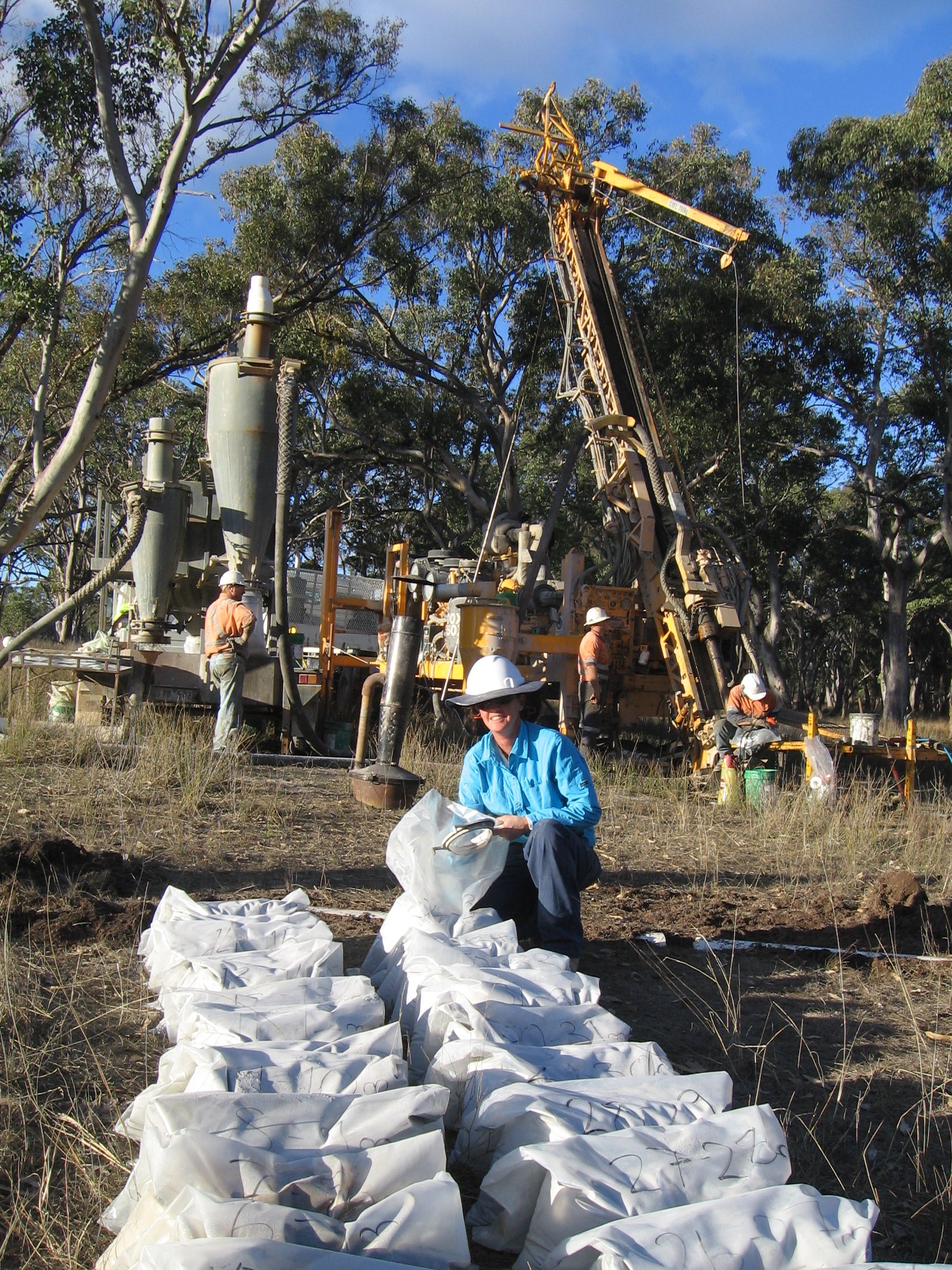
Garnets, Diamonds, Diatremes and Subduction at Bingara, in the New England Orogen of New South Wales, Australia
B. JaneBarron*, L.M. Barron** and G. Duncan
*Consulting Petrologist, 7 Fairview Ave., St Ives, NSW 2075, Australia.
**New South Wales Department of Mineral Resources PO BOX 536, St Leonards, NSW 2065, Australia.
Rimfire Pacific Mining NL, Level 13,379 Queen Street Brisbane, Queensland 4000, Australia.
Corresponding author: email, barronjl@optusnet.com.au
Abstract
In terms of Ca-Mg-Fe the Bingara garnets, form a large population that ranges from Cr-poor pyrope through Mg-rich almandine-pyrope to Fe-rich almandine and even Fe-Mn almandine-spessartine compositions. There is a distinct break at 22 wt% FeO, splitting the garnets into two main chemical groups; those from mantle eclogites (< 22wt% FeO) and those from crustal sources (> 22wt% FeO + MnO). Na2O and TiO2 levels discriminate a small, but well constrained Group I diamond eclogitic garnet population from Cr-poor megacrysts and relatively lower pressure Group II eclogitic garnet. The diamond eclogitic garnets are from three samples on basanite ?capped twin hills called Tom and Jerry. About 2% of the garnets are crustal but have Na2O > 0.5 wt%. Rare garnets of grossular composition also are present. Euhedral Ca-Fe-rich andradite garnets form a separate but minor group.
Twenty four representative garnets were selected for trace- and HREE-element chemistry. Results indicate both MORB and arc mafic protolith with dominantly unfractionated patterns. The crustal garnets with elevated Na2O are highly enriched in HREE and have strongly fractionated patterns that compare with garnets from leucocratic orthogneiss within obducted UHP terranes. The REE patterns further suggest that the low Cr-pyrope garnets are Mg-rich eclogite compositions derived from picritic oceanic protolith, while the euhedral andradite garnets are related to hydrothermal alteration of serpentinised dunite along the Peel Fault zone. The latter confirms a sparse ophiolitic contribution to the Bingara samples.
Bingara garnet chemistry indicates a variety of igneous protoliths and metamorphic grades, and proves that a high pressure- (HP) to ultrahigh- pressure (UHP) eclogitic terrane at depth has been sampled by igneous intrusions, independent of the ophiolite at the surface.
A single (0.265 carat) white diamond, recovered from the north-east slope of Tom and Jerry, has the unique morphology and surface features of other stones from Copeton-Bingara deep leads.
Therefore, the complex Phanerozoic tectonic history of subduction-accretion and tectonic underplating in the New England region, together with garnet-based evidence presented here for an extensive eclogitic to locally diamond eclogitic terrane with a variety of protoliths at depth, strongly supports a local origin for the diamonds that belong in this tectonic setting.